

Schedonnardus paniculatus (Tumble Grass)
| Also known as: | |
|---|---|
| Genus: | Schedonnardus |
| Family: | Poaceae (Grass) |
| Life cycle: | perennial |
| Origin: | native |
| Status: |
|
| Habitat: | sun; dry plains, prairie, rock outcrops, roadsides, along railroads |
| Fruiting season: | July - October |
| Plant height: | 8 to 20 inches |
| Wetland Indicator Status: | none |
| MN county distribution (click map to enlarge): | 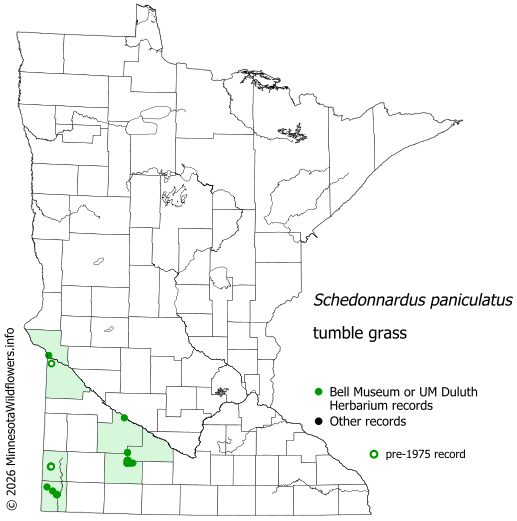 |
| National distribution (click map to enlarge): | 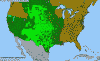 |
Pick an image for a larger view. See the glossary for icon descriptions.
Detailed Information
Flower: 
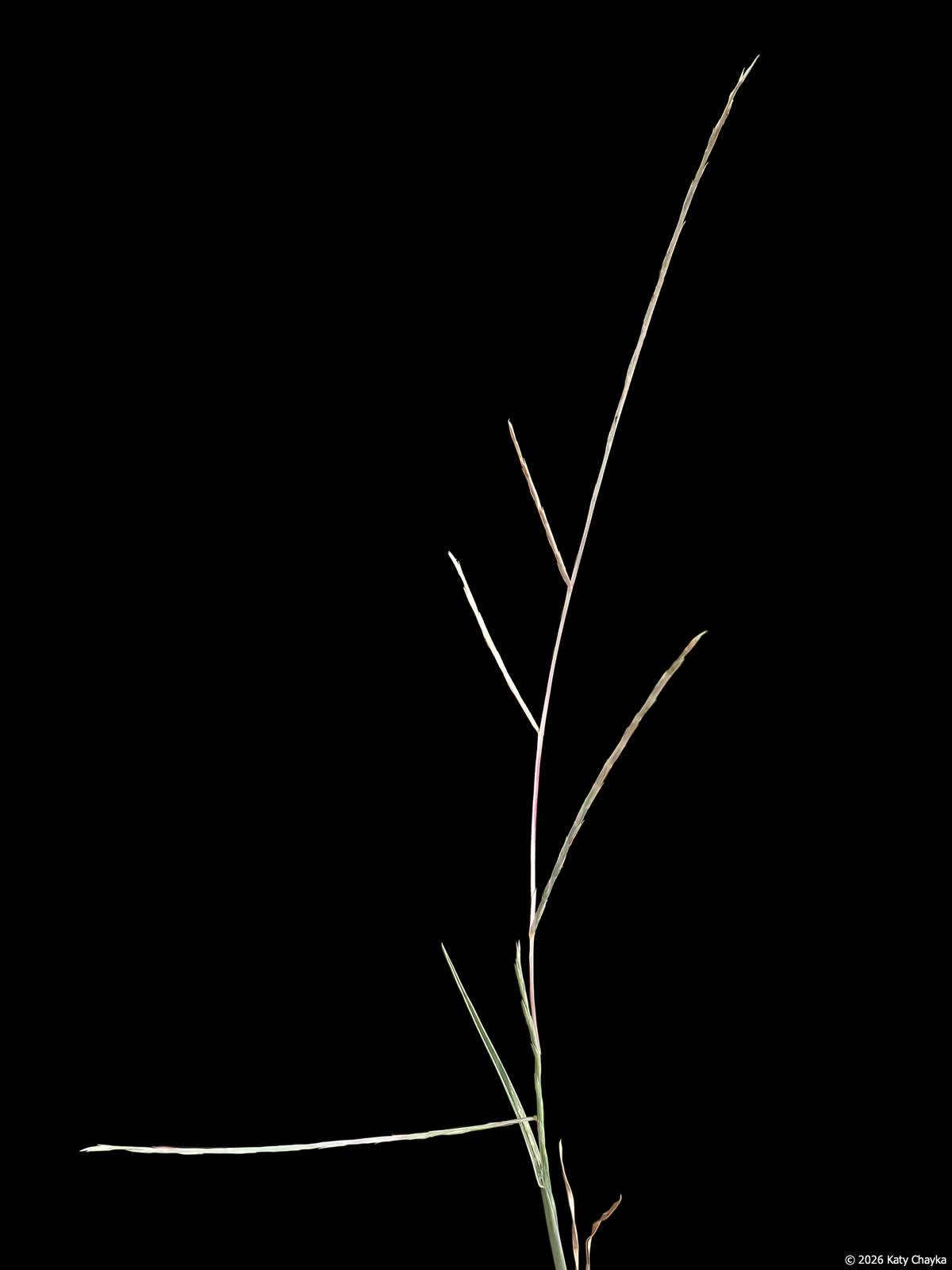 Raceme-like cluster at the top of the stem, up to 20 inches long, taking up ½ to ¾ the entire length of the plant. The 2 to 10 branches are spreading to ascending and widely spaced, 1 branch per node. The lowest branch(es) may be partially enclosed in the uppermost leaf sheath. Spikelets (flower clusters) are appressed, stalkless, not or barely overlapping on the branch, narrowly lance-elliptic in outline, and have a single floret.
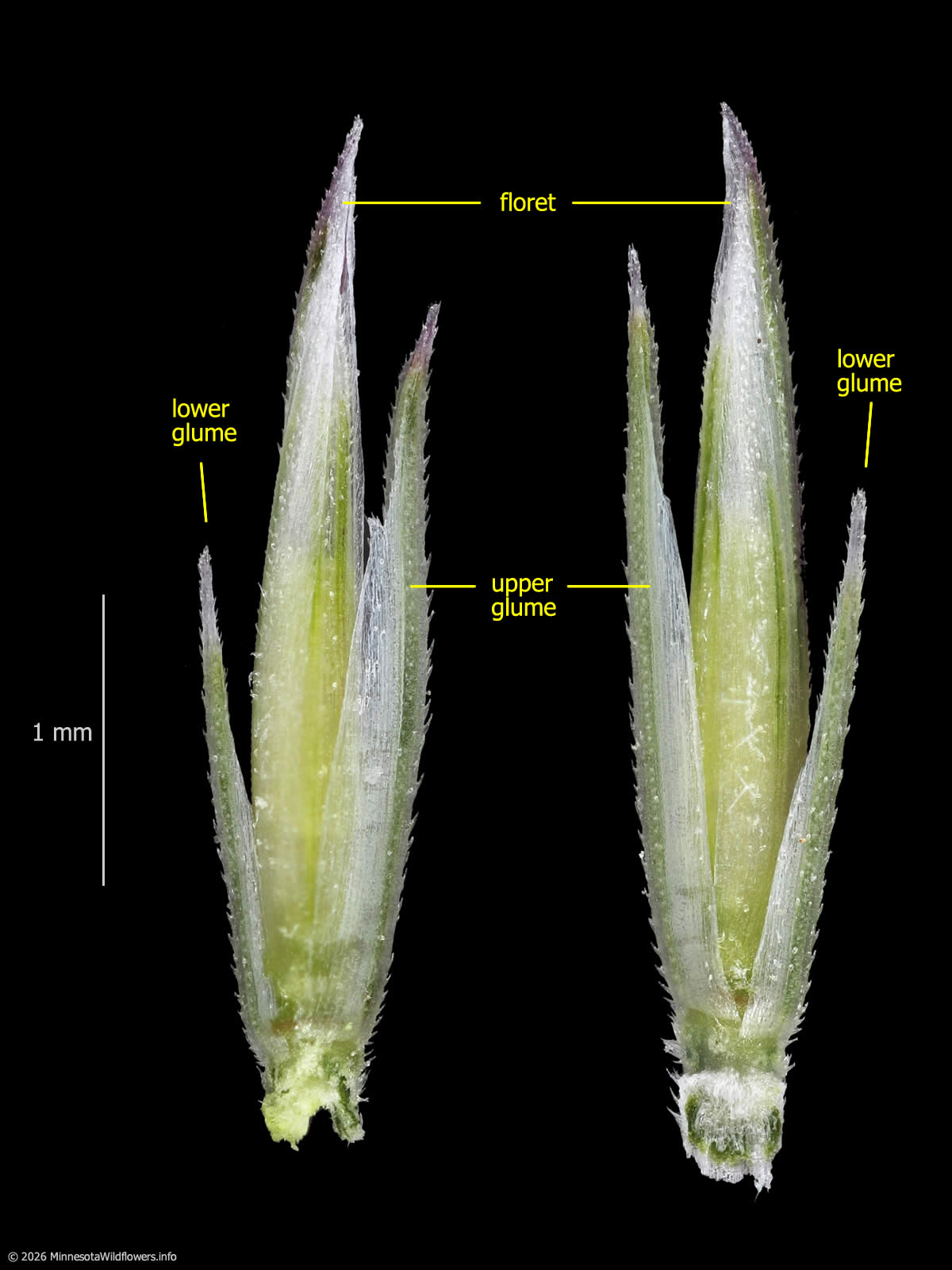 At the base of a spikelet is a pair of bracts (glumes), both green with translucent whitish edging, 1-veined, hairless but rough along the vein, sharply pointed at the tip, the lower glume 1.5 to 3.2 mm long, the upper glume 1.5 to 4+ mm long and both shorter than the spikelet. Florets are surrounded by a pair of bracts (lemma and palea), both similar in size and shape, green to purplish, hairless, 2.5 to 5 mm long, sharply pointed at the tip, the lemma 3-veined, rough along the veins and occasionally short-awned, the palea 2-veined and hairless.
Leaves and stems:
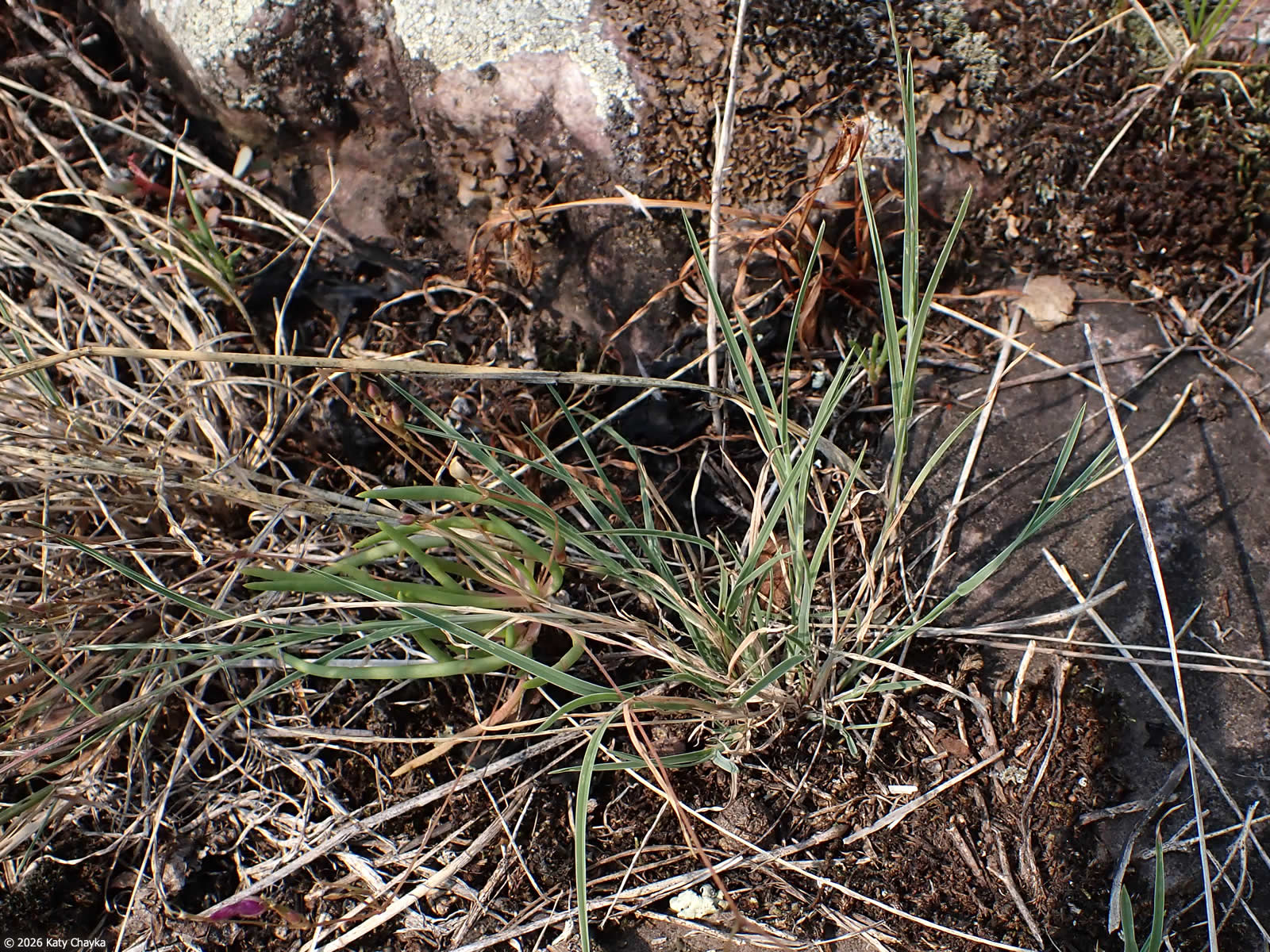 Leaves are alternate but mostly clustered near the base, 1 to 12 cm (to 4¾ inches) long, to 2 mm wide, mostly ascending, flat or folded, hairless, and have a prominent midrib.
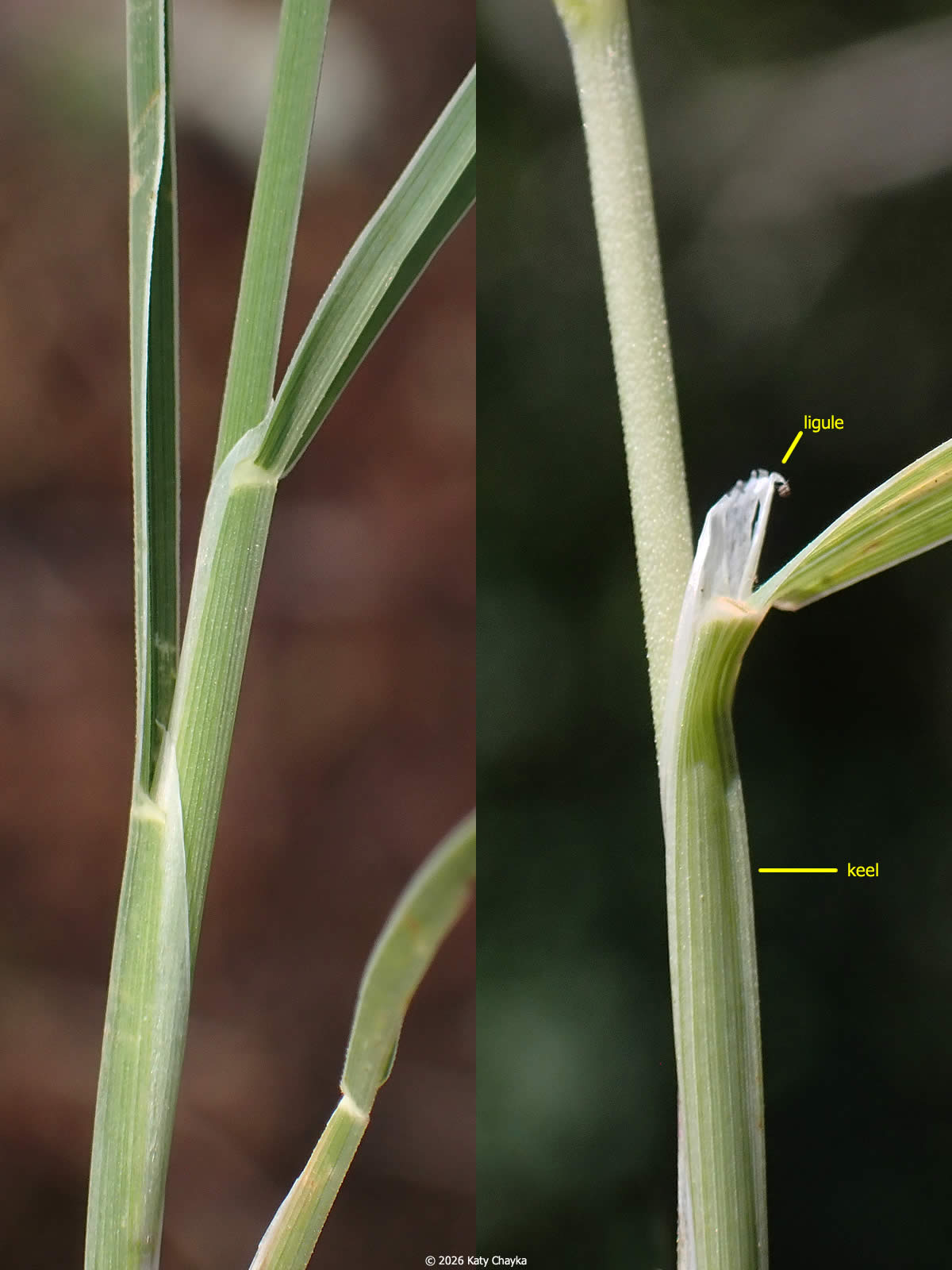 The sheath is hairless, usually has whitish edging, and is keeled along the back. The ligule (membrane where the leaf joins the sheath) is 1 to 3.5 mm long, not fringed with hairs, and is joined with the white edging of the sheath. Nodes are hidden in the sheaths. Stems are single or a few from the base, sometimes branched, erect to ascending or prostrate from the base and rising at a lower node (geniculate), minutely hairy. Plants form clumps but not colonies.
Fruit:
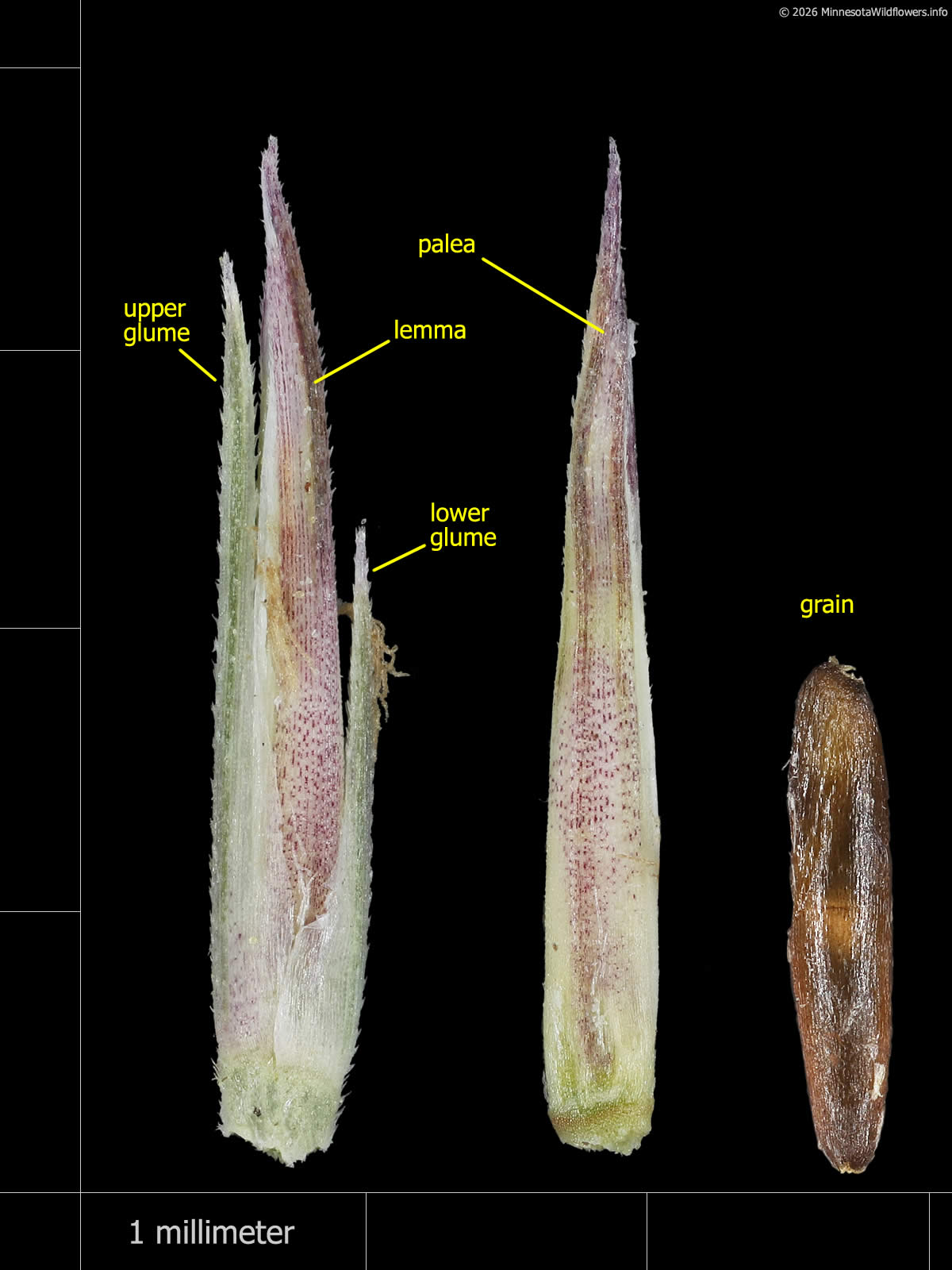 The entire cluster turns straw-colored at maturity and breaks off at the base, forming a tumbleweed to spread its seed to new locations. The central stalk becomes curved, with multiple stems becoming entangled and can persist to the next season. Grains (seeds) are brown, narrowly elliptic, ~2 mm long.
Notes:
Tumble Grass is uncommon in Minnesota, where it reaches the eastern edge of its range. In its wider range, it is something of a weedy species, favoring the disturbed soils of roadsides, railroad rights-of-way and grazed fields, as well as higher grade habitats in the central plains and midwest prairies. In Minnesota, it is almost exclusively found in the rock outcrops our southwest counties. According to the DNR, these outcrops are vulnerable to gravel mining and conversion to agriculture; it was listed as Special Concern in 1984.
Even when you're looking for it, Tumble Grass is easy to miss. The panicle has very slender, widely spaced branches which can be nearly invisible. The first time I noticed it I thought the branches were naked, having already shed all its seed, but a closer inspection saw the florets were still attached, just straw-colored like the branch stalk.
Tumble Grass was recently renamed to Muhlenbergia paniculata after genetic testing, and at a casual glance it bears some similarity to Muhlenbergia cuspidata (Plains Muhly) or M. schreberi (Nimblewill), which also have appressed spikelets but they are stalked and usually awned, and leaves are more evenly distributed along the stem. Tumble Grass spikelets are stalkless and rarely awned, and its leaves are all clustered near the base, with hairless, keeled sheaths.
Native Plant Nurseries, Restoration and Landscaping Services ↓
Map of native plant resources in the upper midwest


More photos
 flowering Tumble Grass plant
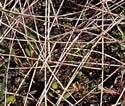 a tangle of old stems
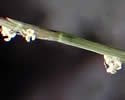 close-up of flowering branch, spikelets not overlapping
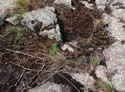 rock outcrop habitat
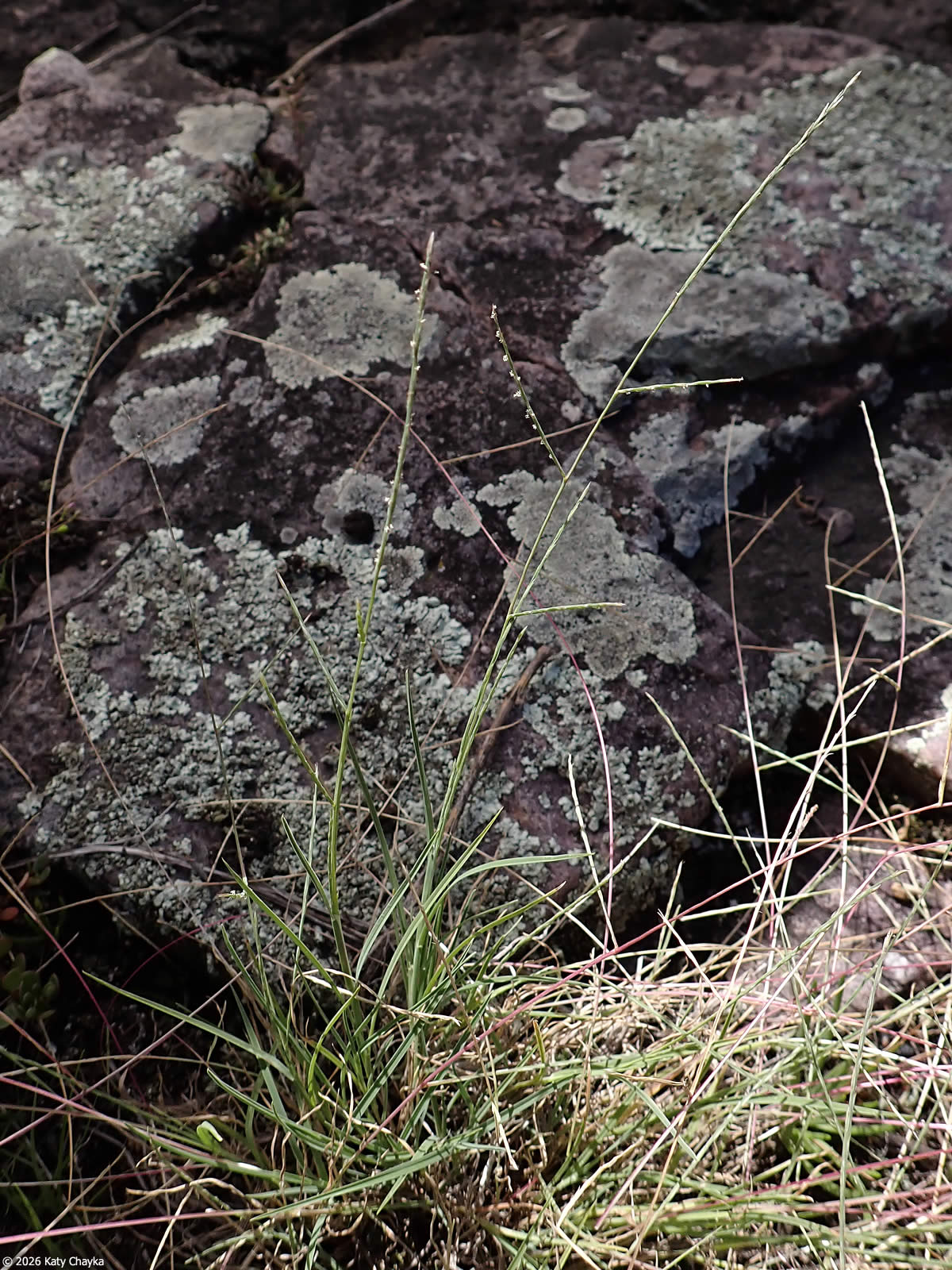 flowering Tumble Grass plant
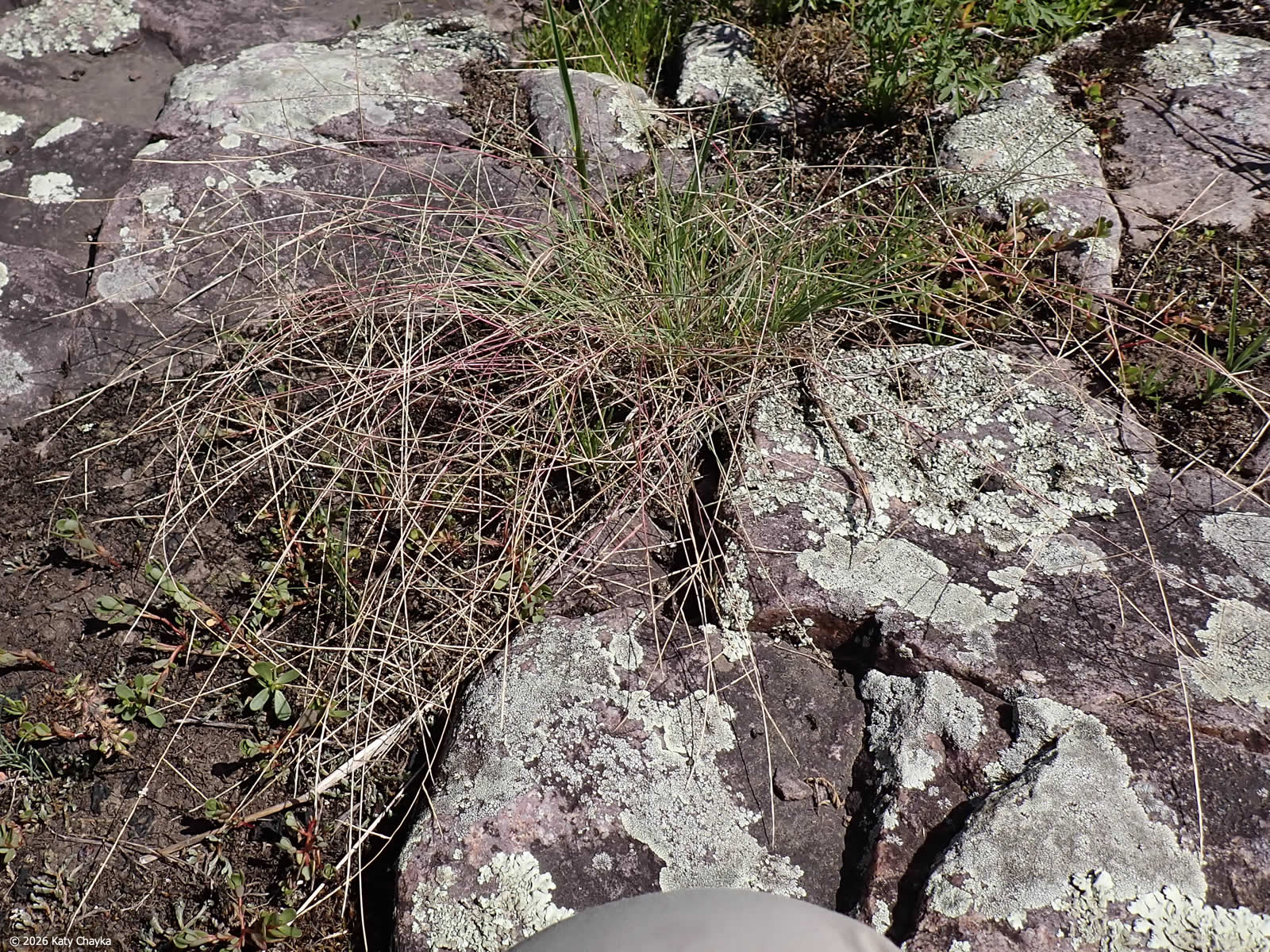 a tangle of old stems
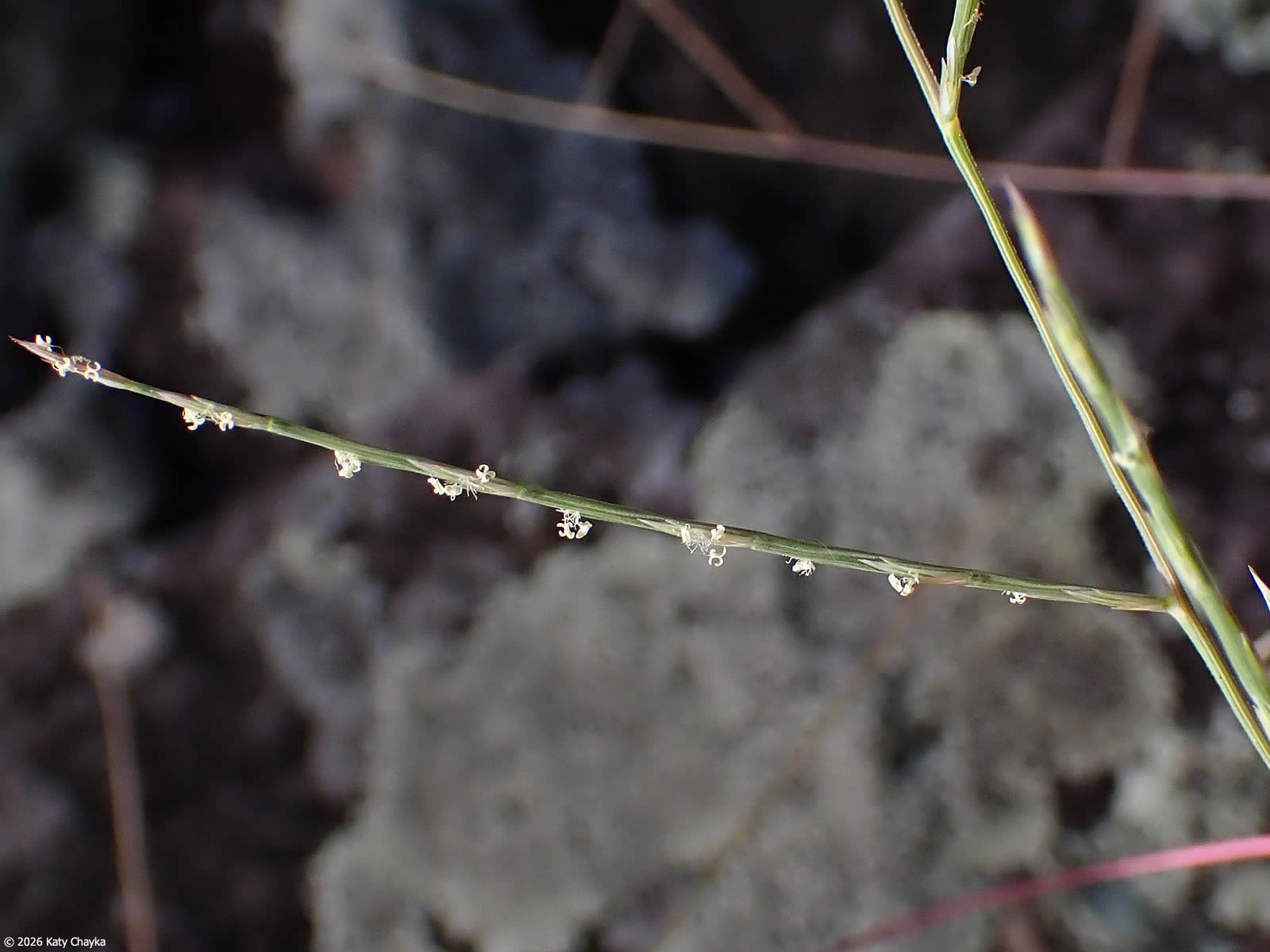 close-up of flowering branch, spikelets not overlapping
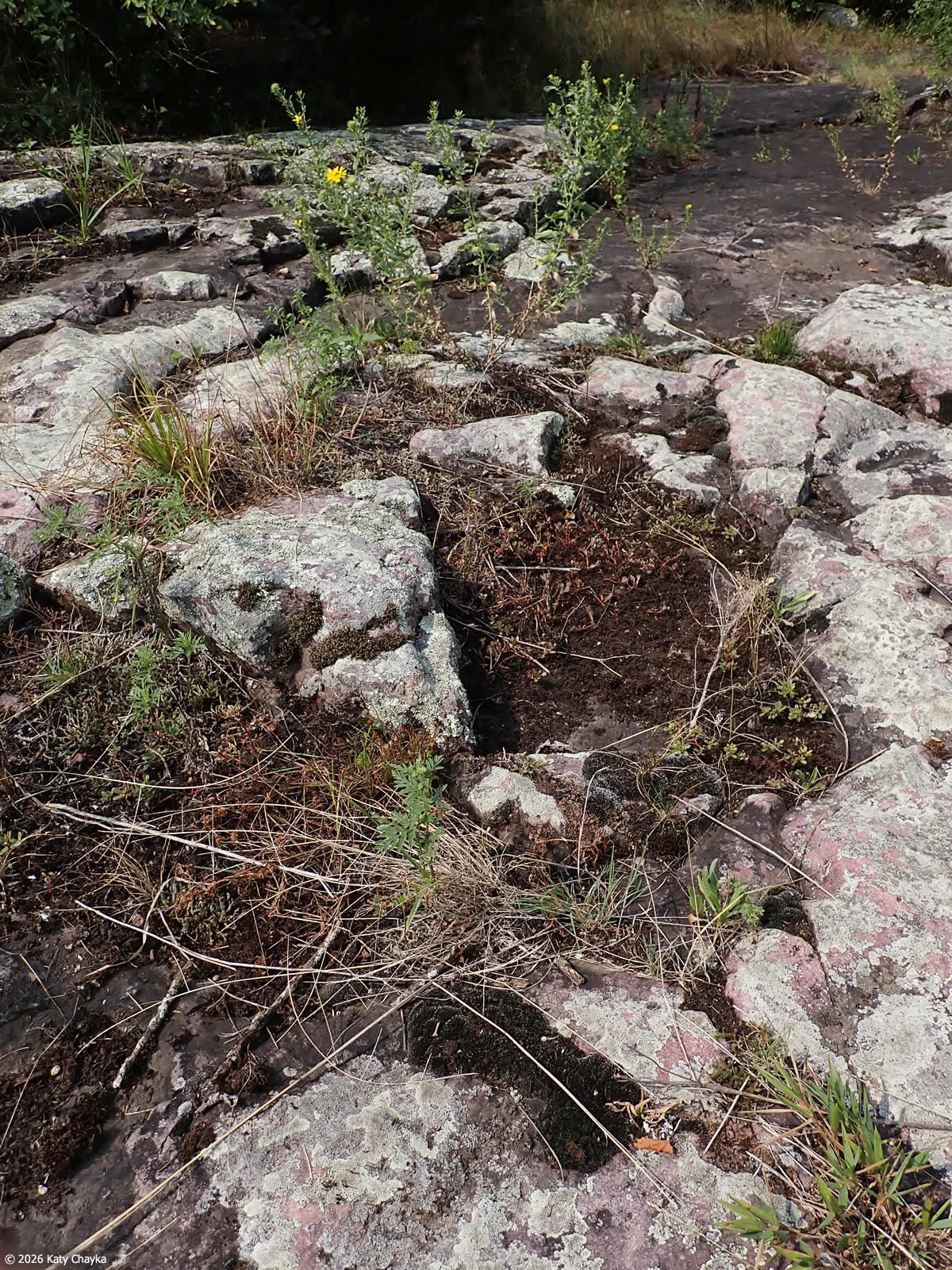 rock outcrop habitat
Photos by K. Chayka taken in Brown County.
Comments
Have you seen this plant in Minnesota, or have any other comments about it?